
The Core Difference in One Sentence
A room addition grows your existing home — it becomes part of the main house. An accessory dwelling unit (ADU) is a self-contained living space on the same property with its own entrance, kitchen, and bathroom. That single distinction shapes everything else: cost, permitting, use, and resale value.
What Is a Room Addition?
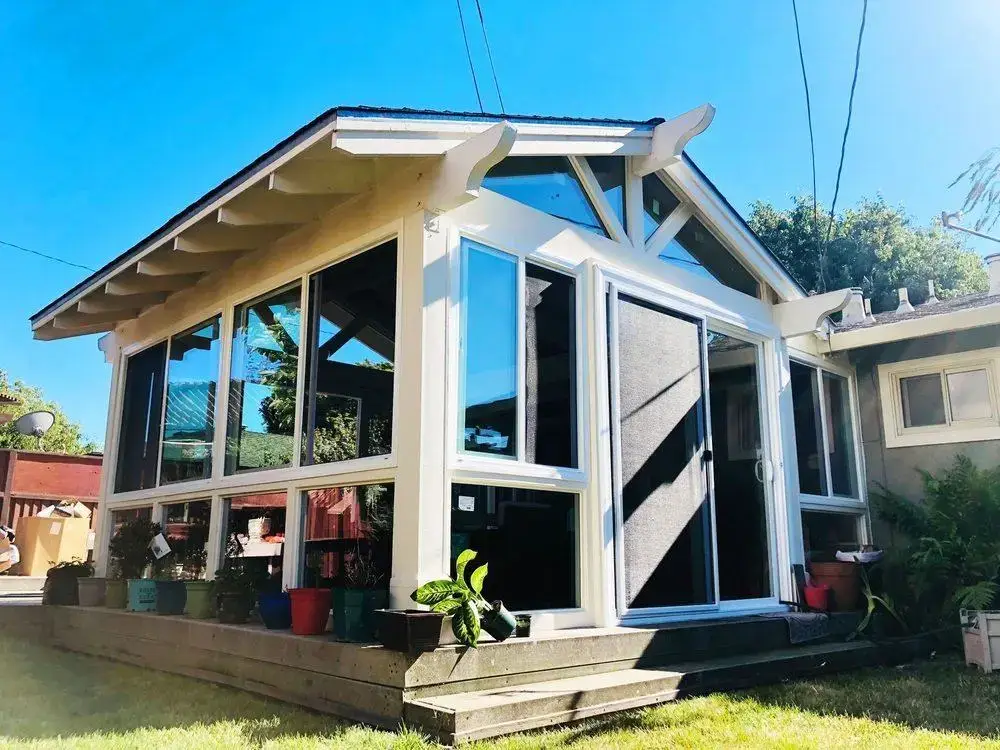
A room addition extends your home's footprint or adds a new story. Common examples include a new primary bedroom, a larger kitchen, a sunroom, a second-story addition, or a family room bump-out. The new space connects directly to the rest of the house through interior doors and shares the home's existing systems — HVAC, plumbing, and electrical — where possible.
Room additions work best when your household needs more living space for daily use: a growing family, a dedicated home office, or a room for an aging parent who will live as part of the household.
What Is an ADU?
An ADU — sometimes called a granny flat, guest house, or in-law unit — is a fully independent dwelling on your property. It has its own entrance, its own kitchen or kitchenette, and its own bathroom. ADUs can be detached (a separate structure), attached (connected to the main home but with a private entrance), or converted from an existing space like a garage.
California has made ADU permitting more accessible in recent years, and many homeowners in Manteca, CA and surrounding areas are adding them to house adult children, provide a space for aging parents who want some privacy, or generate rental income.
Cost Drivers: What Makes Each One More or Less Expensive
Neither option has a fixed price — both depend on size, existing site conditions, the complexity of the design, and local permit requirements. That said, the factors that drive cost are different for each.
Room Addition Cost Drivers
- Foundation type: A slab, crawl space, or raised foundation all affect how much concrete and excavation work is needed.
- Structural changes: Opening walls, adding a load-bearing beam, or tying into an existing roof line adds complexity.
- System tie-ins: Extending plumbing, electrical panels, and HVAC into the new space varies widely depending on where those systems currently live.
- Size and finish level: A simple bedroom addition costs far less than a full second-story addition with a bathroom and custom finishes.
ADU Cost Drivers
- Detached vs. attached vs. conversion: A garage conversion is typically the least expensive path; a detached ADU built from the ground up costs the most.
- Separate utility connections: An ADU needs its own electrical meter, and often its own water and sewer connections, which adds significant cost compared to a room addition.
- Kitchen and full bath: Every ADU requires a full kitchen and bathroom, raising the base cost even for a small unit.
- Site prep: Grading, drainage, and access to the new structure can add cost depending on your lot.
In general, a detached ADU built from scratch carries higher upfront costs than a comparably sized room addition, primarily because of the separate systems and full kitchen requirement. A garage conversion ADU can close that gap considerably. Calling for a free estimate is the only reliable way to compare real numbers for your specific property.
Permitted Uses: How You Can Use Each Space
| Use Case | Room Addition | ADU |
|---|---|---|
| Extra bedroom for family | Yes | Yes |
| Private space for adult child or parent | Limited (shared entry) | Yes (private entry) |
| Long-term rental unit | No (not a separate unit) | Yes |
| Short-term rental (check local rules) | No | Possibly, depending on city rules |
| Home office or studio | Yes | Yes |
| Increases main home's square footage for resale | Yes | Partial (counted separately) |
Long-Term Value: What Does Each One Do for Your Property?
Both options add value, but in different ways.
A room addition increases your home's official square footage, which directly affects its appraised value and what buyers compare it to in the market. A well-designed kitchen expansion or primary suite addition can make your home more competitive when you eventually sell.
An ADU adds value differently. It creates a rentable unit that can generate monthly income, which matters both while you live there and as a selling point to future buyers who want that income stream. In California's housing market, ADUs have become a meaningful draw for buyers who want housing flexibility.
If your primary goal is long-term rental income or housing a family member who needs true independence, an ADU typically delivers more for those specific goals. If your goal is a larger, more functional home for your household's daily life, a room addition is usually the cleaner path.
A Quick Checklist: Which One Fits Your Situation?
A room addition is likely the better fit if you:
- Need more space that connects to your daily living areas
- Want to add square footage that counts toward your home's resale value directly
- Are housing a family member who will live as part of the household
- Don't need a separate kitchen or private entrance
An ADU is likely the better fit if you:
- Want to generate rental income from your property
- Need to house a family member who wants privacy and independence
- Have a detached garage or underused space that could be converted
- Want flexibility — the unit can serve different purposes over time
What About Doing Both?
Some homeowners do exactly that — a room addition to expand the main home and an ADU for rental income or a family member. Because both projects involve permitting, foundations, framing, and finish work, planning them together (even if you build in phases) can reduce redundant costs and keep the design cohesive. A contractor who handles both from the start makes that coordination much simpler.
When to Call a Contractor
Once you have a sense of which direction fits your goals, the next step is understanding what your specific lot and home will actually support — and what the project will cost. Setback requirements, lot coverage limits, existing utility locations, and the condition of your foundation all affect what's feasible and what it will take to get there.
Anaba Construction handles both room additions and ADUs in Manteca, CA and throughout the surrounding area. Anaba holds California A, B, and C-21 licenses and provides free estimates along with free draft drawings, so you can see your project before committing to anything. Call or text (510) 826-9443 to talk through your options and get a plan on paper at no cost.
Frequently asked questions
What is the main difference between an ADU and a room addition?
A room addition expands your existing home and connects to it as part of the main living space. An ADU is a fully independent dwelling with its own entrance, kitchen, and bathroom, intended to function as a separate unit.
Can I rent out a room addition?
A standard room addition is not a separate dwelling unit, so it cannot be rented as an independent apartment. If rental income is your goal, an ADU is the appropriate path.
Is an ADU always more expensive than a room addition?
Not necessarily. A garage conversion ADU can cost less than a large second-story room addition. The main cost drivers for an ADU are the separate utility connections and the required full kitchen and bathroom. Getting a free estimate for your specific property is the best way to compare real numbers.
Does an ADU add to my home's square footage for resale purposes?
An ADU is typically counted separately from the main home's square footage, but it does add overall property value, particularly because of its income-generating potential and its appeal to buyers who want housing flexibility.
Do I need permits for both an ADU and a room addition in California?
Yes, both require building permits in California. California has streamlined ADU permitting in recent years, but you still need approved plans and inspections. A licensed general contractor can guide you through the permitting process for either project.